


Prepare for Prime Day on Amazon: before, during, after
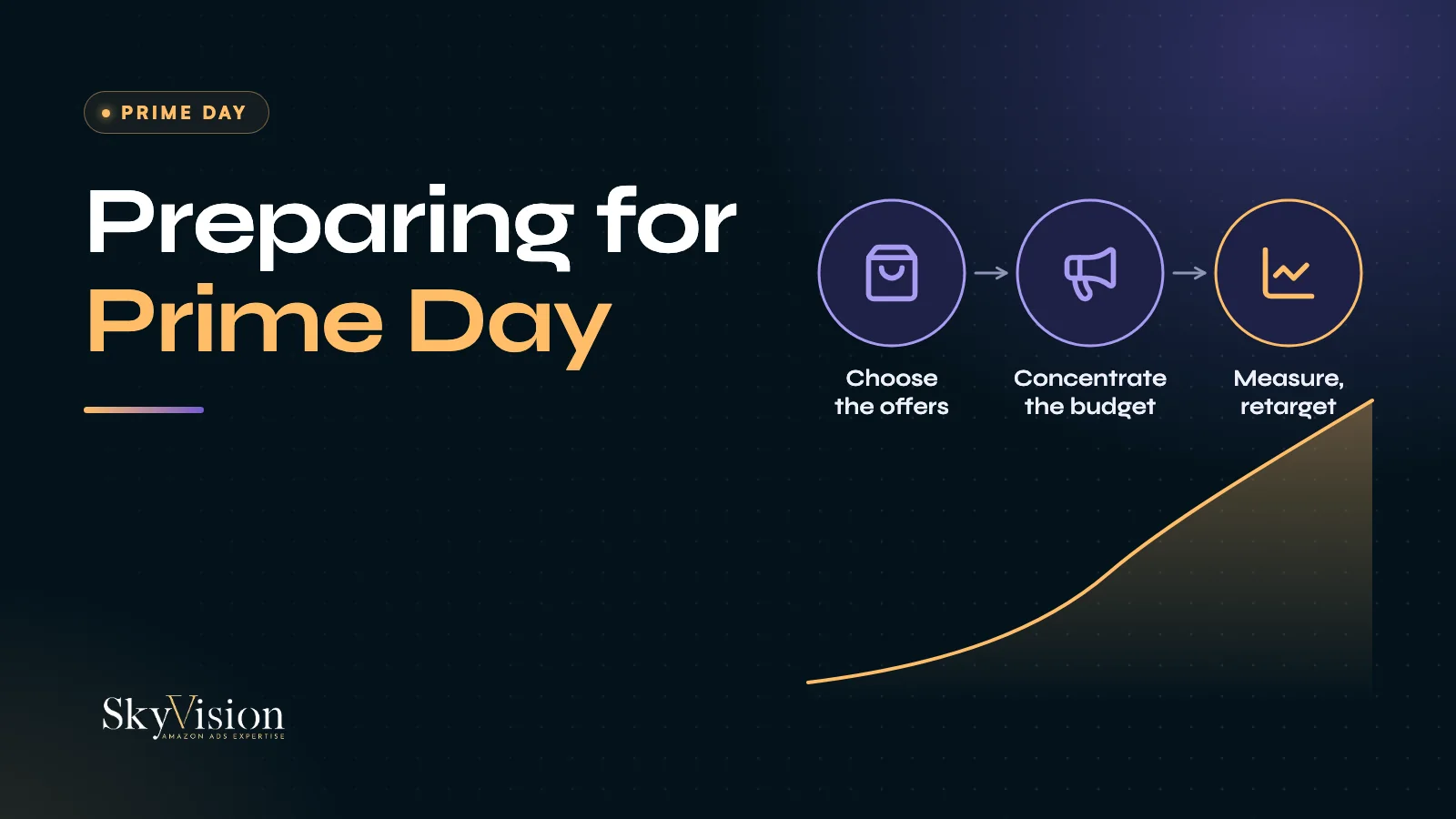
A Prime Day is not prepared the night before, and it does not end on the last evening. Quentin, co-founder of SKYVISION, splits the preparation into three stages: before, during, after.
SKYVISION is an agency specialised in Amazon advertising, so our view is biased. Quentin filmed this video in late May 2025, for the July 2025 edition (6 minutes 31, in French with English subtitles):
What changes from one edition to the next, and what stays
The video targets the July 2025 edition. Yet dates, length and participation rules vary from one Prime Day to the next. According to the Prime Day page of Amazon Ads (read on 21/10/2026), the 2025 edition lasted four days and the 2026 edition ran from 23 to 26 June 2026. This article therefore uses no date from the video.
It keeps what holds from year to year: the three-stage plan. Amazon Ads presents it the same way, with resources to act before, during and after the event. Prime Day is, according to Amazon, a shopping event that offers deals and discounts to Prime members.
Before: choose the products you put on offer
According to Quentin, the first decision is whether or not you take part in the Prime Day deals. It shapes the rest of your strategy.
In 2025, he explains, products on offer carried a very visible badge, and shoppers could filter to display only deals. A product without an offer risked not showing up for those people. That is how it worked in 2025: check in your account what applies today. The Prime Day page of sell.amazon.fr (read on 21/10/2026) confirms that Prime Exclusive Discounts are highlighted in search results and on product pages.
Quentin does not advise entering the whole catalogue. He suggests choosing a few products, for example your best sellers or those you have the most stock of. A shopper who likes the brand can then explore the rest of your range from your Store.
On Amazon's side, the Prime Day page of sell.amazon.fr (read on 21/10/2026) lists three types of action: create a promotional offer, a Prime Exclusive Discount or a coupon reserved for Prime members. It advises sending stock as early as possible. It gives no deadline for registering offers: you will find it in Seller Central, edition by edition.
Before: two stages of campaigns
Once the products are chosen, the strategy depends on your category. Why? Because the time between first seeing a product and buying it is not the same for a cheap beauty product and for a more expensive one. Quentin estimates it from experience, with AMC (Amazon Marketing Cloud), Amazon's advertising data tool, which he covers in another video on the channel. The durations he quotes are rules of thumb from experience, so they are not repeated here. Measure the buying delay of your own products instead; AMC can help.
Quentin then splits the ramp-up into two phases.
- A first, long consideration phase. It does not necessarily try to sell, even if sales also count towards ranking. The goal is to be seen by an audience that would like to buy this type of product but does not know your brand yet, so that your brand makes it onto the list it compares. This is the logic described in our article on awareness, consideration and conversion.
- A second phase, closer to the event, when the customer really starts searching. You then accelerate on the keywords that have worked well, in impressions, click-through rate and orders. Quentin observes that cost per click and cost per thousand impressions are then much lower than on the day of the event. The idea is to occupy the customer's mind, then stay there.
Amazon Ads points in a similar direction in its Prime Day 2026 guide (read on 21/10/2026): raise budgets a few days before the event, and check your caps, because a budget already used up when the peak arrives makes you miss that peak.
During: concentrate the budget and defend your brand
On the day, Quentin concentrates the budget on the products on offer. He sees little point in spending on those that are not. The Amazon Ads guide points the same way: run Sponsored Products campaigns on the products that sell best and carry good deals, follow performance in real time and adjust bids, keep budgets open for the campaigns that perform.
Bids are necessarily higher, Quentin warns. In 2025 he mentions event-specific bids, which can be set in the ads and which he showed in another video. Check which options exist in your account before the next edition.
He insists above all on defence. People who search for your brand thanks to the work of the consideration phase must land on your products. Otherwise another brand can show up on the day and take that work. So protect your brand keywords, in addition to offensive campaigns.
After: measure, then retarget
For Quentin, the post-Prime Day period is the most underestimated part of the event. First task: retrace what happened. AMC shows which audiences saw an ad, clicked, added to cart or bought. Without it, it is possible, but less precise. Amazon also recommends comparing activity before, during and after the event, and following the value of new customers over the next twelve months.
Retargeting comes next. Someone who bought during the event may not be satisfied. Another did not buy, or took a different product. According to Quentin, these people then receive less advertising, because brand budgets are generally lower after the event: costs are lower. It is, he says, the chance to make the earlier investment pay off, since you have enough data to retarget. No result is promised: it all depends on your product and your execution.
To check at every edition
This list is this article's, not the video's:
- dates and length, on the Prime Day page of Amazon Ads;
- offer types and their registration deadline, in Seller Central;
- the badge and the deals filter as Quentin describes them in 2025, in your account;
- event-specific bid options, in your advertising account.
Frequently asked questions
When should you start preparing for Prime Day?
Several weeks before, according to Quentin: his first phase, consideration, starts well before the customer's active search. The exact length depends on how long your product takes to buy. Amazon Ads advises raising budgets a few days before the event.
Should you put your whole catalogue on offer?
Not necessarily. Quentin recommends only a few products, such as your best sellers or those with the most stock, to stay visible to shoppers who filter deals. The rest of the range is then discovered through your Store.
What should you do after Prime Day?
Measure, then retarget. Retrace the audiences' journey, compare activity before, during and after, and retarget buyers who were not satisfied or those who did not buy. According to Quentin, costs are then lower.
For the other big peak of the year, read our article on preparing for the holiday season; to choose your formats, Sponsored Products, Brands or Display; and for measurement, our Amazon Marketing Cloud page.


